Alice
Both books
Seven years old, literal-minded, and the only person in Wonderland who notices it is nonsense — her politeness under absurdity is the engine of the comedy. Carroll's Alice argues logic with madmen; adaptations soften her into a wide-eyed tourist at their peril.
The White Rabbit
Wonderland
The waistcoated, watch-consulting herald whose lateness opens the book. He is anxiety in a waistcoat — important-seeming, perpetually behind, and the reason "down the rabbit hole" entered the language.
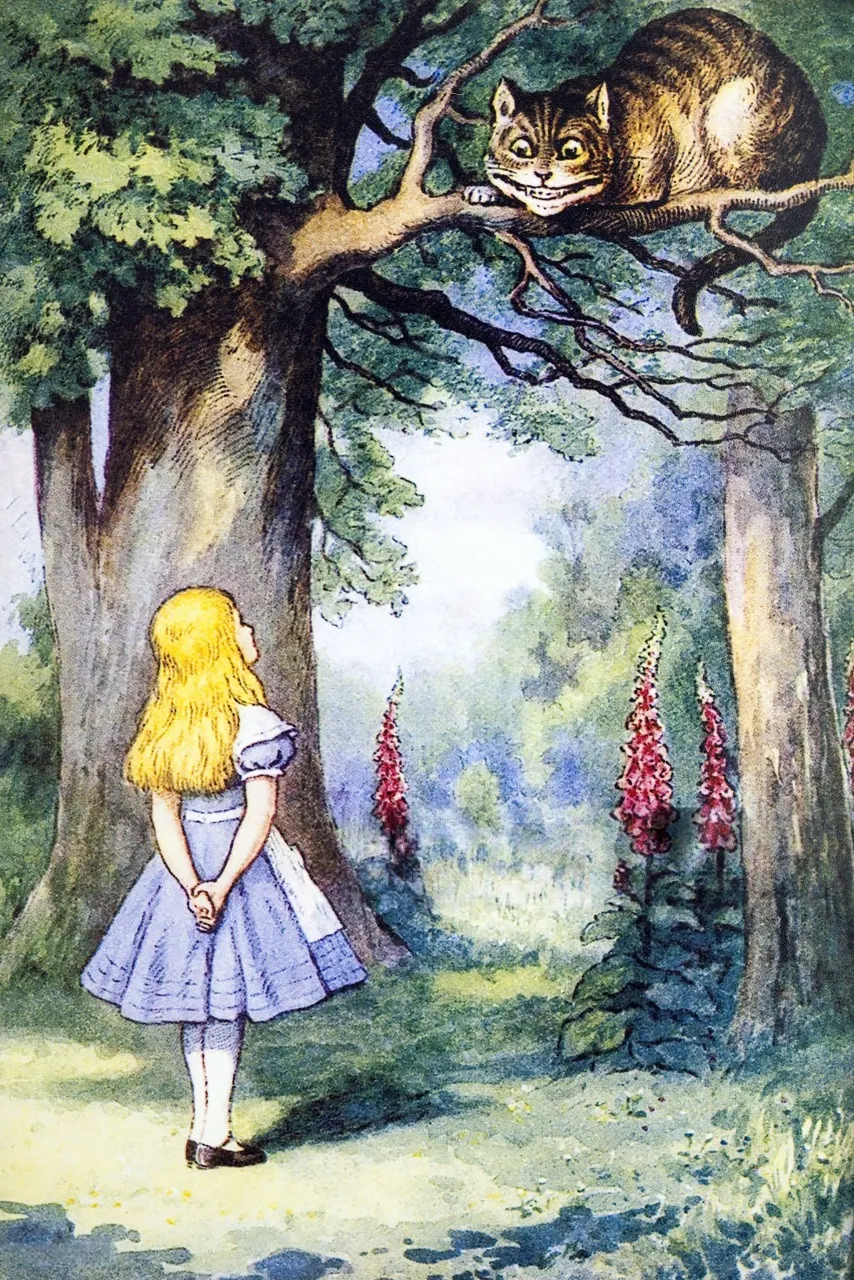
The Cheshire Cat
Wonderland (ch. 6, 8)
The grinning cat who vanishes by degrees until only the grin remains, and the book's closest thing to a truth-teller. His exchange with Alice about which way to go — it depends where you want to get to — is the most misquoted passage in the book. See the quotes page.
The Mad Hatter & the March Hare
Wonderland (ch. 7)
Hosts of the perpetual tea party — trapped at six o'clock after "murdering the time." Note for pedants and pub quizzes: Carroll never calls him "the Mad Hatter" in the text; he is simply the Hatter, at a mad tea-party.
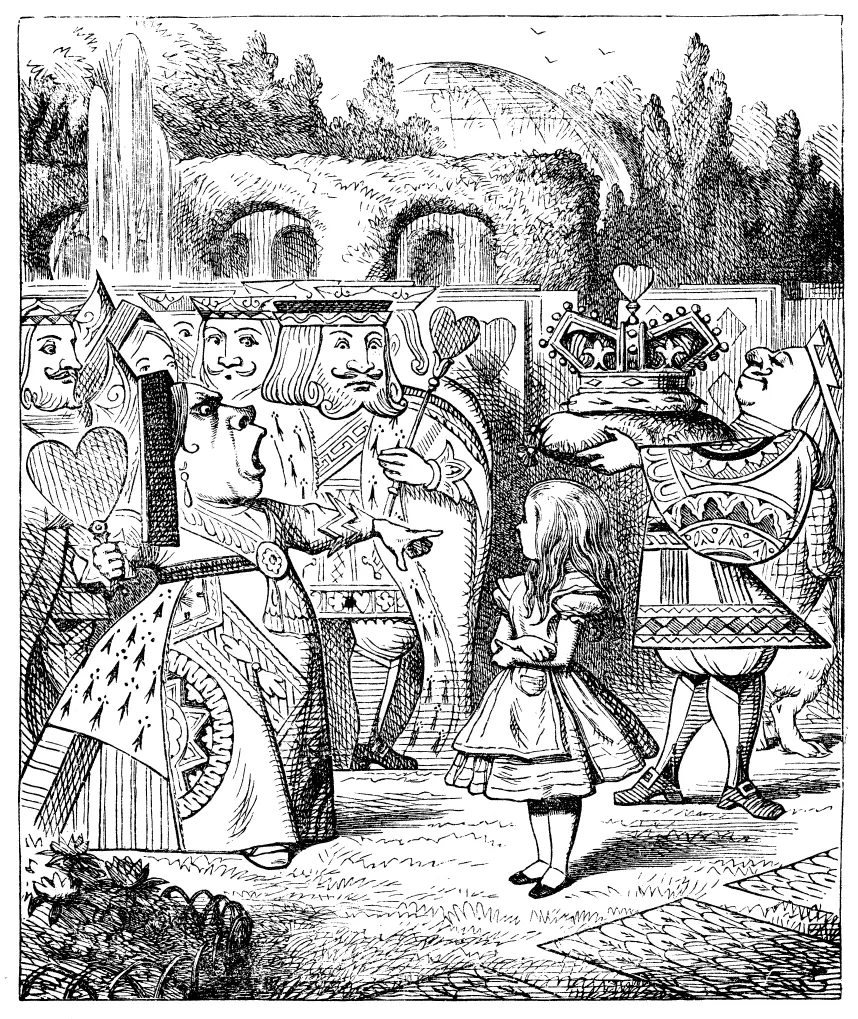
The Queen of Hearts
Wonderland
The playing-card tyrant whose one idea is "Off with her head!" — sentence first, verdict afterwards. Carroll described her as blind, aimless Fury; the trick of her comedy is that nobody actually gets executed, as the Gryphon quietly admits.
The Caterpillar
Wonderland (ch. 5)
Three inches tall, hookah-smoking, and catechizing — his "Who are YOU?" opens the book's identity theme. The 2010 film's name for him, Absolem, appears nowhere in Carroll; searchers looking for Absolem are looking for the film's invention.
The Duchess, the Mock Turtle & the Gryphon
Wonderland
The pepper-mad Duchess comes with a moral for everything. The Mock Turtle — a sob story built from a Victorian soup pun — comes with the Gryphon as his dry chaperone. The book's deepest-cut characters, and reliably the ones adaptations drop first.
Tweedledum & Tweedledee
Looking-Glass (1871), not Wonderland
The mirror twins belong to the sequel — imported into "Alice in Wonderland" by the 1951 Disney film, which blended both books. Same for Humpty Dumpty, the Jabberwock, and the White Queen: sequel natives, popularly mis-shelved.